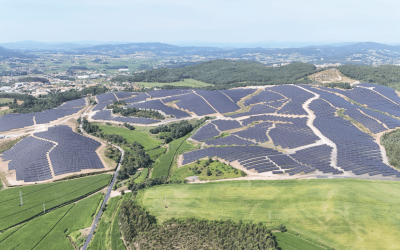
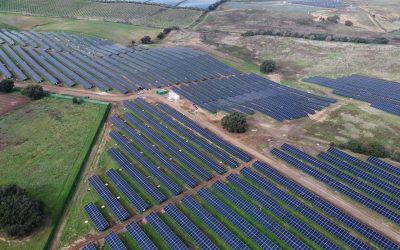
The transition to renewable energy is a global imperative, not just for environmental reasons but also for economic advantage. While it presents some of the most ambitious challenges in recent times, it’s urgent to accelerate its implementation. Renewables’ superior cost-effectiveness compared to fossil fuels and their positive environmental impact make them ideal partners for this shift. However, the challenge isn’t merely technical; it’s also social, political, and environmental. It demands awareness and collaboration among all involved parties, and to ensure its effectiveness, deployment must align with strategic planning that maximizes its positive impact.
Fortunately, in Europe, we have the European Green Deal, a key roadmap for achieving a climate-neutral and sustainable EU. It sets a crucial objective for the energy transition – Fit for 55– which aims to reduce emissions by at least 55% by 2030, significantly boosting the share of renewable energy. Specifically, the latest revision of the Renewable Energy Directive (RED III) raises the renewable energy target to 42.5% of final energy consumption by 2030, with an indicative target of 45%.
This objective not only pushes for expansion but also for the accelerated decarbonization of the energy mix by replacing fossil fuels with clean energy sources. It also emphasizes ensuring the efficient integration of renewables into the grid, adapting energy infrastructure to new intermittent sources, and securing the necessary flexibility for stable operation.
The reality is we cannot afford to delay the Sustainable Development Goals (SDGs); every step counts toward a sustainable future. We must maintain and strengthen our commitment, accelerating climate action within this framework. To achieve this, the National Integrated Energy and Climate Plans (PNIECs) translate these goals into tangible, hopeful, albeit challenging, scenarios for member states.
Spain, for instance, is emerging as a key player in the energy transition. With a target of 81% renewable energy use in the country’s electricity generation by 2030, it recorded 56.81% in 2024, contributing a total of 148,975 GWh and setting a new record for clean energy’s contribution, according to the latest data from the Association of Renewable Energy Companies (APPA). This positions Spain 24.19% below its 2030 target, highlighting the need to increase penetration by 4.8% per year.
The situation in other member states is similar. Italy, for example, shares a 2030 target with a lower percentage in renewable electricity generation – 65%. Looking at other European benchmarks, German renewables accounted for 59% of total energy generation, 21% short of their 2030 target. The penetration rate would need to increase by 1.8% and 4.2% respectively for these two countries.
However, some countries are exceeding even the most optimistic expectations. Not far geographically, Portugal, which aligns with an 81% clean energy target for national generation, supplied 71% of its national electricity consumption in 2024 through renewable energy production, leaving only 10% to go with five years until the deadline.
With only five years left until 2030, does Europe have enough time? Is large-scale integration of renewables possible before then?
Strategies for success
Achieving this is complex but not impossible. Lots of European countries have an increasingly adapted energy infrastructure for renewable generation, which could help it overcome current energy transition challenges.
One of the fundamental pillars for success is electrifying consumption, which would mean reducing fossil fuels as a primary energy source. In the case of Spain, the Association of Renewable Energy Companies (APPA), in its report “The Electrification Moment: Renewable Energy for a Competitive Economy” explains that Spanish industry consumes 57% of its final energy for heat, with 77% of this energy coming from fossil fuels.
In this regard, electrifying industrial processes through specific technologies would significantly reduce this dependency, lowering costs and minimizing exposure to gas and oil price volatility. For example, heat pumps achieve energy efficiency up to four times higher than gas or diesel boilers, leading to annual savings of 380 to 680 euros per household. In sectors like food, paper, and chemicals, their implementation could cover up to 80% of needs, offering a total cost of ownership up to 61% lower than conventional boilers.
Electric vehicles are also a crucial player. Promoting their use through government incentives and improved charging infrastructure will not only reduce reliance on fossil fuels but also eliminate direct gas emissions, leading to improved health in cities.
However, achieving the energy transition goes further. It’s also essential to integrate energy storage systems to ensure grid stability and maximize renewable generation utilization. According to the PNIEC, Spain needs to integrate an additional 73 GW of solar PV, 60 GW of onshore wind, 2.5 GW of offshore wind, and 22 GW of storage systems into the grid in the coming years.
Reaching this capacity is possible if energy demand is met by new electro-intensive industries, such as data centers, which are essential for the digital economy and have high energy consumption. In Spain, these centers use a closed-loop cooling system that is filled with 4,000 m³ of water only at the beginning of the facility’s life – a figure less than the 6,000 m³ required by one hectare of corn cultivation. Similarly, battery assembly production plants are especially promising. While still under development in Spain, they are already a reality in many other European countries due to their rapid market integration.
This might sound ambitious, but the implementation of these strategies is already being driven by incentive programs and aid. This, coupled with the fact that increasing renewable capacity is reducing energy costs, is favoring the leverage of change.
Future trends: speed is key
The speed of renewable energy integration into EU countries’ energy mixes is undeniable. Several countries have surpassed 50% renewable electricity generation in their energy mixes, demonstrating that the transition is possible. However, to go further and achieve total decarbonization, new drivers will be needed to accelerate this process.
One of these, as mentioned before, will continue to be led by energy storage through batteries. Their deployment will allow for more efficient management of renewable electricity, reducing dependence on fossil fuels and improving grid stability. With increasingly competitive prices, their widespread adoption will be crucial to maximize the utilization of renewable generation.
The competitiveness of these batteries, combined with advancements in smart grids and energy management systems, is also essential for the future. This will optimize the integration of different technologies, allowing for the hybridization of solar and wind power, compensating for the variability of one source with the other, and addressing intermittency without relying solely on complementarity between renewable sources.
Finally, commercial and industrial (C&I) self-consumption systems will play a crucial role in the energy transition. The widespread adoption of self-consumption has multiple benefits, such as reducing “in front of the meter” electricity demand and freeing up grid capacity for new consumption – electric mobility and data centers, for example.
These 2-to-4-hour storage systems improve internal energy management, allowing companies and businesses to adjust their consumption curves and reduce external dependency. Furthermore, they balance the electricity grid and prevent overloads, ensuring a more reliable supply.
What challenges do we face?
How we manage this transition will determine not only success in the fight against climate change but also the future of our communities and the world we leave to future generations. Therefore, it must reach its full potential, which will only be possible through clear and efficient regulation that incentivizes the implementation of energy storage systems.
To achieve this, we must have dynamic energy pricing and capacity mechanisms that foster viable business models within the value chain, promoting the role of the aggregator.
Furthermore, the regulation of aggregation and flexibility services is essential to efficiently manage energy flow and optimize the distribution of energy resources. In this context, it’s important to ensure grid support for the safe and efficient integration of distributed renewable energy; aggregate distributed energy resources to provide grid services; and manage distributed demand through virtual power plants (VPPs).
I have no doubt: the future of energy is renewable, decentralized, and efficient, but it requires the commitment of all key stakeholders. The speed at which this is achieved will determine the construction of a resilient, competitive, and stable energy system.
Signed by:
Daniel Sánchez, Engineering & Construction Director at BNZ.